Looking to elevate your space with a vibrant, seamless glow?
The right neon led strip can instantly transform any room, storefront, or creative project from dull to breathtaking. But with so many options for brightness, flexibility, and waterproof ratings, finding the right fit isn’t always easy.
In this guide, you’ll learn exactly how to choose the best neon led strip for your specific design needs and budget—without the guesswork.
Let’s dive right in.
Silicone vs. PVC Neon LED Strip Encapsulation
Choosing the right encapsulation material defines the optical quality, lifespan, and environmental durability of any neon led strip. We engineer our flexible linear fixtures using either advanced food-grade silicone or cost-conscious polyvinyl chloride (PVC). Understanding the material science between these two polymers ensures optimal performance across commercial, architectural, and residential installations.
+—————————+————————————+————————————+
| Feature | Food-Grade Silicone Neon Flex | Traditional PVC Neon Strip |
+—————————+————————————+————————————+
| Operating Temperature | -40°C to +60°C (-40°F to 140°F) | -10°C to +45°C (14°F to 113°F) |
| UV & Yellowing Resistance | Extreme (No yellowing > 5 years) | Moderate to Poor (Degrades in UV) |
| Chemical / Saline Proof | High (Resists salt, acid, alkalis) | Low (Prone to surface oxidation) |
| Flame Retardancy | Self-extinguishing (UL94 V-0/V-2) | Standard flame resistance |
| Elasticity & Flexibility | Retains high memory and bend flex | Hardens and cracks over time |
| Primary Application | Outdoor facades, pools, high-end | Short-term indoor, budget signage |
+—————————+————————————+————————————+
Food-Grade Silicone Extrusion and Thermal Resistance (-40°C to +60°C)
Our flexible silicone neon flex utilizes high-purity, food-grade silicone polymers. This material maintains complete structural and optical stability across extreme temperature swings:
- Sub-Zero Performance: Retains mechanical flexibility down to -40°C without micro-fracturing or stiffening.
- High-Heat Endurance: Dissipates internal thermal loads up to +60°C ambient temperatures without lumen decay or jacket deformation.
- Thermal Conductivity: Accelerates heat transfer away from internal LED chips to maintain luminous efficacy.
UV, Saline, and Yellowing Resistance for Architectural Longevity
Architectural facade lighting requires long-term optical clarity. Silicone possesses an inorganic silicon-oxygen backbone that is chemically inert:
- Zero Photodegradation: Resists direct, continuous UV-A and UV-B exposure without yellowing, clouding, or chalking.
- Coastal and Marine Grade: Resists saltwater mist, chlorine, and chemical air pollutants, making it ideal for marine, resort, and shoreline applications.
- Stable Transmittance: Maintains over 90% light transmittance throughout its operating life.
Self-Extinguishing Flame Retardancy and Long-Term Elasticity
Silicone delivers superior mechanical and life-safety properties for public infrastructure and architectural interiors:
- Fire Safety: Formulated with self-extinguishing compounds complying with UL94 V-0 fire safety ratings; produces non-toxic white smoke if exposed to direct open flame.
- Elastic Memory: Resists tensile fatigue, returning to its calibrated profile without mechanical creep or interior circuit trace damage.
- Tear Strength: High-tensile outer sleeve resists job-site snags, abrasions, and tight bend stresses.
PVC Extrusion Features and Indoor Budget Profiles
PVC offers an economical solution tailored for short-term and controlled indoor environments:
- Cost-Effective: Lowers initial project costs for value-engineered fit-outs and promotional retail displays.
- Standard Interior Use: Performs reliably in climate-controlled spaces for direct or indirect cove accents.
- Form Holding: Provides rigid initial mechanical support for quick, straight runs in low-stress indoor mountings.
Risks of Cracking, Hardening, and Discoloration in PVC
Standard PVC relies on organic plasticizers that degrade when exposed to outdoor elements:
- Plasticizer Migration: UV radiation and heat evaporate internal plasticizers, causing the jacket to turn brittle and crack within 12 to 24 months outdoors.
- Yellowing Optical Shift: Solar exposure breaks polymer chains, shifting the color temperature toward a dull yellow and reducing overall lumen output.
- Moisture Ingress: Thermal expansion and contraction cause micro-fissures around end caps and seams, leading to premature ingress protection (IP) failure.
Integrated Silicone Co-Extrusion Technology Advantages
We manufacture high-grade silicone extrusion LED tape using solid, multi-layer integrated co-extrusion technology:
- One-Step Molding: The flexible PCB, internal copper wiring, opaque reflective base, and translucent silicone diffuser are extruded simultaneously in a seamless process.
- Elimination of Air Gaps: The absence of internal air pockets eliminates condensation, stops internal optical refraction losses, and prevents component delamination.
- Continuous IP Integrity: Fully encases the internal circuit in a solid protective barrier, delivering consistent waterproof, dustproof, and mechanical protection across the entire run.
Optical Form Factors and Bending Orientations of Neon LED Strips
Selecting the correct mechanical bending profile prevents internal circuit fracture, solder fatigue, and optical distortion during installation. Bending an extrusion against its engineered axis damages the internal flexible printed circuit (FPC). We design and manufacture four distinct optical form factors to match specific architectural geometries and mechanical layouts.
Top-Bending Neon Strips for Vertical Coves and Architectural Wall Grazing
Top-bending (top-view) profiles flex perpendicularly to the light-emitting surface. The light shoots directly outward from the flat top face, allowing the strip to curve smoothly over arches, barrel-vaulted ceilings, columns, and contoured wall surfaces.
- Bending Axis: Vertical plane (up and down relative to the base).
- Optical Beam Angle: 120° to 160° flat diffusion.
- Core Applications: Architectural cove lighting, wall grazing over curved facades, step risers, and curved handrails.
- Installation Tip: Maintain the minimum specified bend radius (typically 30mm to 60mm depending on profile width) to avoid compressing the internal silicone core.
Side-Bending Flexible Strips for 2D Contours, Signage, and Curved Surfaces
Side-emitting neon led strip designs bend along the horizontal plane parallel to the light-emitting face. This enables lateral flexing across flat surfaces without twisting the extrusion.
- Bending Axis: Horizontal plane (left to right along the base).
- Optical Beam Angle: 120° diffuse lateral output.
- Core Applications: Custom neon signage lighting, channel lettering, rounded millwork, organic floor patterns, and serpentine ceiling paths.
- Structural Stability: Side-bend profiles snap securely into straight aluminum tracks or bendable stainless steel clips, holding intricate 2D patterns without curling or lifting.
3D and Free-Bending Neon Flex for Irregular Architectural Sculptures
Standard extrusions restrict movement to a single axis. 3D free-bending flexible silicone neon flex incorporates specialized multi-segmented internal FPCs and omni-flexible silicone housings that articulate in both X and Y axes simultaneously.
- Bending Axis: Dual-axis and multi-plane flexibility.
- Core Applications: Double-curved architectural structures, fluid artistic wave installations, helical handrails, and parametric ceilings.
- Design Advantage: Eliminates the need for multiple cut-and-solder corner joints, preserving continuous IP-rated ingress protection across complex three-dimensional runs. For detailed architectural layout strategies, check our LED strip and neon flex applications guide.
360-Degree Round Neon Flex for Suspended Chandeliers and Omnidirectional Fixtures
The 360-degree round neon tube delivers seamless, omnidirectional illumination with zero dark spots or visible mounting shadows. Engineered with a cylindrical silicone extrusion and dual-sided or circular LED arrays, this form factor behaves like modern structural glass neon.
- Bending Axis: Omnidirectional (360° free manipulation).
- Optical Beam Angle: Full 360° cylindrical diffusion.
- Core Applications: Suspended vertical pendant lines, custom geometric chandeliers, illuminated spatial art grids, and exposed decorative loops.
- Mounting Integration: Installed using suspended aircraft cables, transparent ring clips, or rigid ceiling sockets that power the tube from one or both ends. To review mounting specifications and profile comparisons, explore our definitive handbook on LED neon flex lights.
Bending Orientation & Optical Form Factor Comparison
| Form Factor | Primary Bending Direction | Beam Angle | Minimum Bend Radius | Best Suited Applications |
|---|
| Top-Bend | Vertical (Up / Down) | 120° – 160° | 30mm – 50mm | Wall grazing, arches, steps, cove ceilings |
| Side-Bend | Horizontal (Lateral Left / Right) | 120° | 20mm – 40mm | Signage, channel letters, serpentine paths |
| 3D Free-Bend | Multi-Axis (Dual-Plane) | 160° | 40mm – 60mm | Parametric shapes, wave ceilings, 3D sculptures |
| 360° Round | Omnidirectional (All Planes) | Full 360° | 50mm – 80mm | Pendants, exposed tube fixtures, chandeliers |
Voltage Selection and Power Sizing for Neon LED Strips
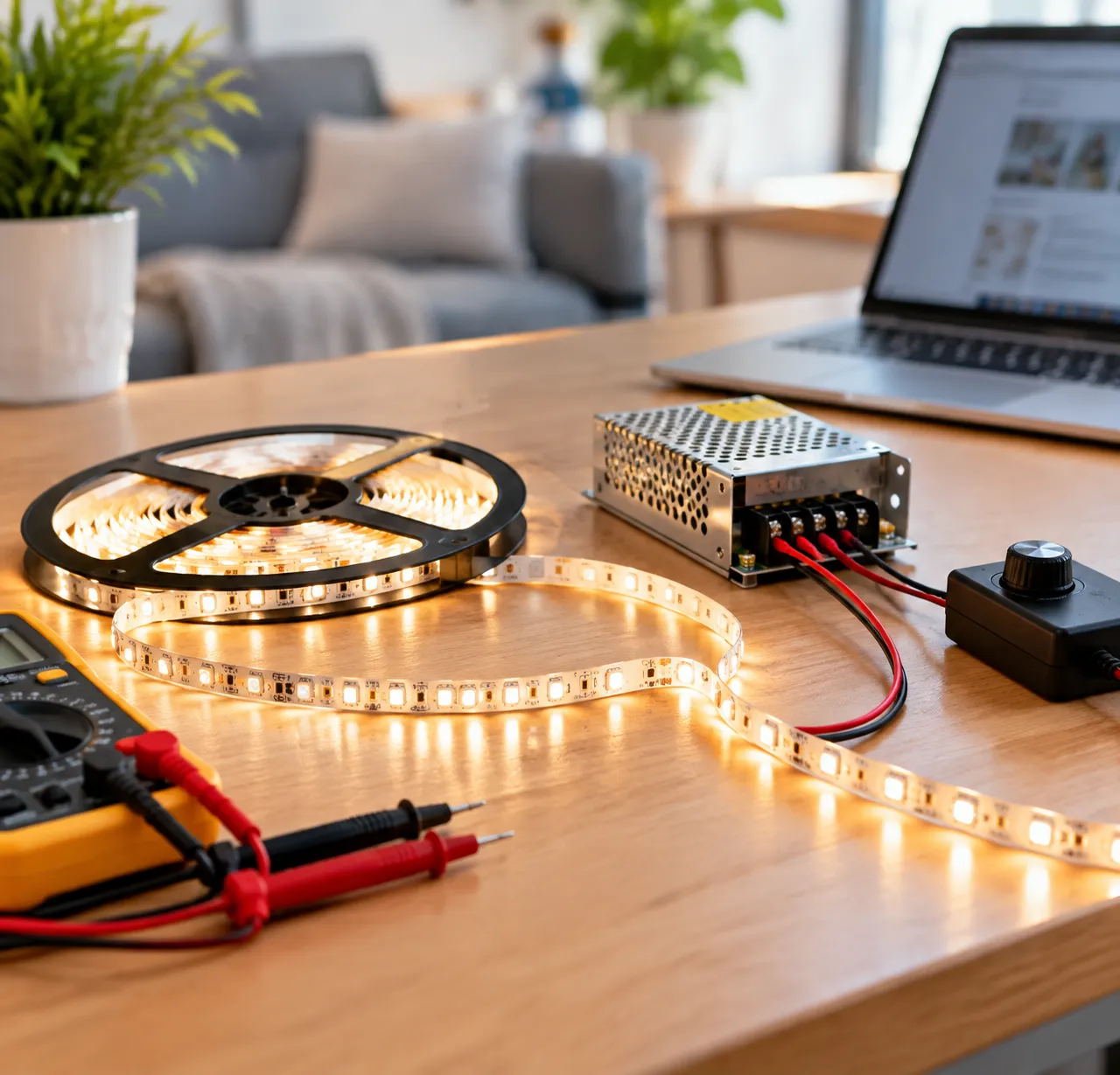
Choosing the right operating voltage for your neon led strip determines cut flexibility, maximum run length, and power supply layout. We match voltage ratings directly to project scale to prevent thermal stress and brightness drop across continuous runs.
+—————-+———————+——————-+———————————–+
| Voltage Rating | Typical Cut Unit | Max Single Feed | Primary Application |
+—————-+———————+——————-+———————————–+
| 12V DC | 10 mm – 25 mm | 5 meters | Intricate signage & tight curves |
| 24V DC | 50 mm – 100 mm | 10 meters | Architectural coves & retail runs |
| 48V DC | 100 mm – 200 mm | 20 – 30 meters | Large commercial facades |
| 110V / 220V AC | 500 mm – 1000 mm | 50 meters | Extended outdoor border outlines |
+—————-+———————+——————-+———————————–+
Low-Voltage DC Options: 12V, 24V, and 48V
- 12V DC Neon Strips: Best for intricate cuttable neon light strip designs and custom neon signage. The short cutting unit (down to 10 mm on specialized profiles) allows tight radius turns and exact letter shaping. Keep total run lengths under 5 meters per power feed to prevent visible dimming at the tail end.
- 24V DC Strip Lighting: The baseline standard for commercial interior and exterior linear lighting. A 24V LED neon rope light carries current more efficiently than 12V equivalents, allowing continuous single-feed runs up to 10 meters without luminous flux degradation.
- 48V DC Ultra-Long Runs: Designed for large-scale interior coves and exterior perimeters. By stepping up to 48V DC, current draw drops significantly, allowing uninterrupted 20-meter to 30-meter single-end power feeds with minimal line loss.
High-Voltage 110V/220V AC Driverless Neon Flex
High-voltage AC neon runs directly from rectified mains power without bulky external DC step-down transformers.
- Extended Lengths: Supports continuous uninterrupted runs up to 50 meters on a single power feed.
- Trade-Offs: Longer cutting unit intervals (typically 0.5 m to 1 m increments) and thicker insulation profiles. High-voltage installations require strict mechanical protection and proper grounding for safety.
Power Supply Sizing Formula and the 80% Rule
Under-sizing power supplies causes overheating, driver shutdown, and premature LED failure. We always size drivers using the 80% continuous load rule (operating the transformer at no more than 80% of its rated capacity).
Use this formula to calculate minimum driver capacity:
$Minimum Driver Wattage (W) = Total Length (m) × Watts per Meter (W/m) × 1.25$
Example: A 15-meter run of flexible silicone neon flex drawing 12W/m requires:
$15 × 12 × 1.25 = 225 Watts$
Select the next standard driver size above the calculation (e.g., a 240W or 250W power supply). For detailed wiring setups and driver selections, refer to our guide to choosing the ideal power supply for your LED strip light system.
Conductor Wire Gauge (AWG) Sizing to Prevent Line Loss
Running long lead cables between the power supply and the start of the neon LED strip causes DC voltage drop. Undersized lead wire starves the fixture of voltage, leading to color shifting and reduced lumen output.
Use the following AWG gauge references for standard 24V installations drawing 5 Amps:
- Distance up to 5 meters (16 ft): 18 AWG (0.75 mm²)
- Distance up to 10 meters (33 ft): 16 AWG (1.5 mm²)
- Distance up to 15 meters (50 ft): 14 AWG (2.5 mm²)
- Distance up to 25 meters (82 ft): 12 AWG (4.0 mm²)
Keep voltage drop under 3% to 5% across the entire DC circuit to maintain uniform brightness from the initial feed point to the end of the line.
Color Temperatures, Dynamics, and Control Protocols
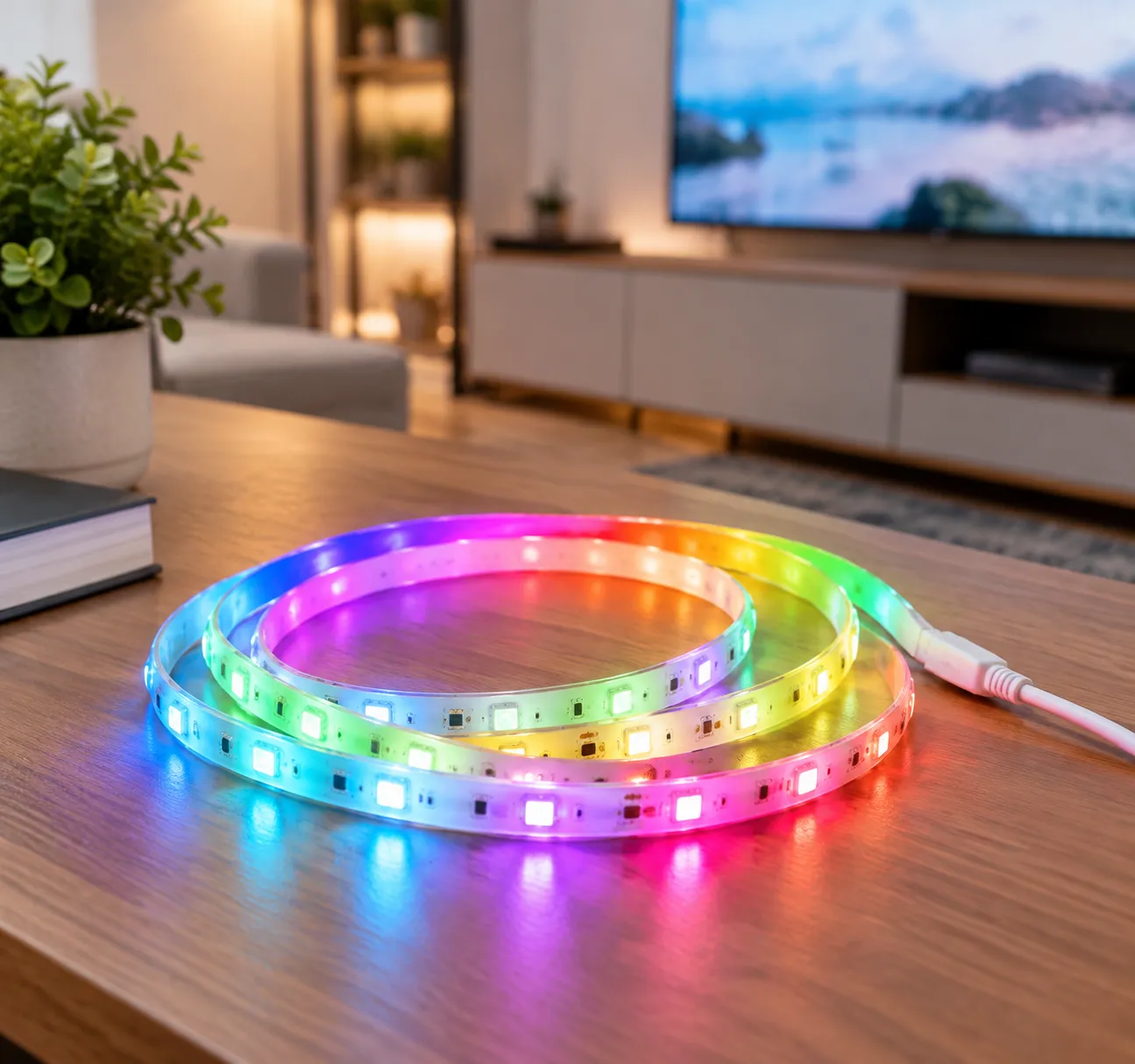
We engineer every neon LED strip to deliver uniform, dot-free illumination across all color spectrums and dynamic digital modes. Choosing the right optical setup and control protocol ensures your lighting scheme meets precise architectural design specifications without signal lag or color distortion.
Monochromatic White Options (2700K to 6500K) and Static Single Colors
Static neon LED strip runs deliver clean, consistent light for functional coves, task areas, and brand outlines. We balance our phosphor mixtures to achieve high color rendering (CRI >90) across all standard color temperatures:
- 2700K – 3000K (Warm White): Soft, inviting glow ideal for residential coves, hospitality lounges, and historic building trims.
- 4000K – 4500K (Neutral White): Clean, crisp illumination with zero yellow or blue tint, widely used in modern offices and retail displays.
- 6000K – 6500K (Cool/Daylight White): High-visibility, energetic light engineered for commercial facade borders, signage backlighting, and modern industrial designs.
- Static Monochromatic Colors: Direct-wavelength outputs in red (620–630nm), green (520–530nm), blue (460–470nm), amber (590–595nm), and custom pastels like pink and aqua.
Tunable White (Dual CCT) and Warm Dimming for Circadian Lighting
Dynamic white neon strips house alternating warm white and cool white chips on a single continuous PCB. Modulating the duty cycle between channels creates tailored atmospheric shifts:
- Dual CCT Dynamic Tuning: Full transition from 2700K to 6500K enables human-centric circadian rhythms inside commercial workspaces and healthcare facilities.
- Warm Dimming (Dim-to-Warm): Automatically shifts color temperature from 3000K down to 1800K as brightness decreases, mimicking traditional halogen filament behavior in restaurants and entertainment venues.
RGB, RGBW, and RGBCCT Multi-Color Spectrums for Balanced Pastel Tones
While standard 3-in-1 RGB chips mix colors by overlapping primary diodes, pure architectural projects require dedicated white emitters to maintain accurate pastel tones and clean daylight rendering. For a breakdown of diode configurations, read our detailed analysis on comparing RGB, RGBW, RGBIC, and RGBCCT LED strip lights.
- RGB Neon Rope Light: Blends red, green, and blue to render millions of saturated hues; producing white results in an imperfect, slightly bluish tint.
- RGBW Neon Strips: Adds an independent 3000K, 4000K, or 6000K white diode to the cluster, delivering accurate white illumination alongside dynamic color scenes.
- RGBCCT Neon Systems: Combines RGB channels with dual tunable white diodes (warm and cool), producing pure, balanced pastel tones alongside full Kelvin-spectrum adjustment.
Pixel and Digital Addressable Neon Strips with Integrated ICs
Addressable neon strips let you control individual cutting segments or single LED nodes independently. Integrated circuits (ICs) decode incoming digital data, allowing custom chase patterns, gradients, audio-reactive pulses, and digital signage effects without physical segment wiring.
- External ICs (e.g., WS2811, UCS1903): Control groups of 3 or 6 LEDs per pixel, offering a cost-effective solution for architectural outlines and long dynamic runs.
- Integrated ICs (e.g., WS2812B, SK6812, UCS2904): Built directly inside the 5050 LED package for point-by-point pixel resolution, ideal for detailed graphics and close-view signage.
- Dual-Data / Breakpoint Continuous (e.g., WS2813, WS2815, CS2803): Features a backup data line ensuring that if a single IC fails, the downstream pixel data continues uninterrupted.
Control System Integration: SPI and DMX512 Programming
Choosing the right protocol determines system stability over long distances and defines how the lighting interfaces with broader building automation setups. When designing architectural installations, review our guide comparing DMX and DALI lighting systems to select the right control infrastructure.
[Master Controller / PC]
│ (Art-Net / sACN via Ethernet)
▼
[DMX512 / SPI Master Decoder]
│ (RS485 Differential or TTL Data)
├──────────────► [DMX Addressable Neon Strip Run 1] (Up to 300m Bus)
└──────────────► [SPI Pixel Neon Strip Run 2] (Short Run / <10m Data Feeds)
- SPI (Serial Peripheral Interface): Uses single-ended TTL signal lines (Data and Clock). SPI is ideal for localized decorative displays and custom signage controllers where the distance from decoder to the first LED pixel is under 5 to 10 meters.
- DMX512 (RS485 Differential Signaling): The international standard for commercial facade lighting and stage automation. Differential data lines resist heavy electromagnetic interference and send signals up to 300 meters without repeaters. Native DMX512 neon strips feature built-in addressable driver ICs that wire directly to standard 3-wire or 5-wire DMX buses.
Control Protocol Selection Guide
| Control Protocol | Signal Type | Max Transmission Distance | Best Architectural Application | Wiring Complexity |
|---|
| 0/1-10V & PWM | Analog Voltage / PWM | 30m – 50m | Monochromatic cove dimming | Low (2-wire DC) |
| DALI-2 / Push Dim | Digital Bus | Up to 300m | Office & smart building white/CCT control | Moderate (2-wire polarity-free bus) |
| SPI (TTL) | Digital Serial (Single-Ended) | <10m (without line drivers) | Retail signs, dynamic bar fronts, custom art | Low to Moderate (3/4-wire data lines) |
| DMX512 / RDM | Differential Digital (RS485) | Up to 300m | Large building facades, bridges, interactive stages | High (Shielded twisted-pair data lines) |
Ingress Protection (IP) Ratings for Indoor and Outdoor Neon Strips
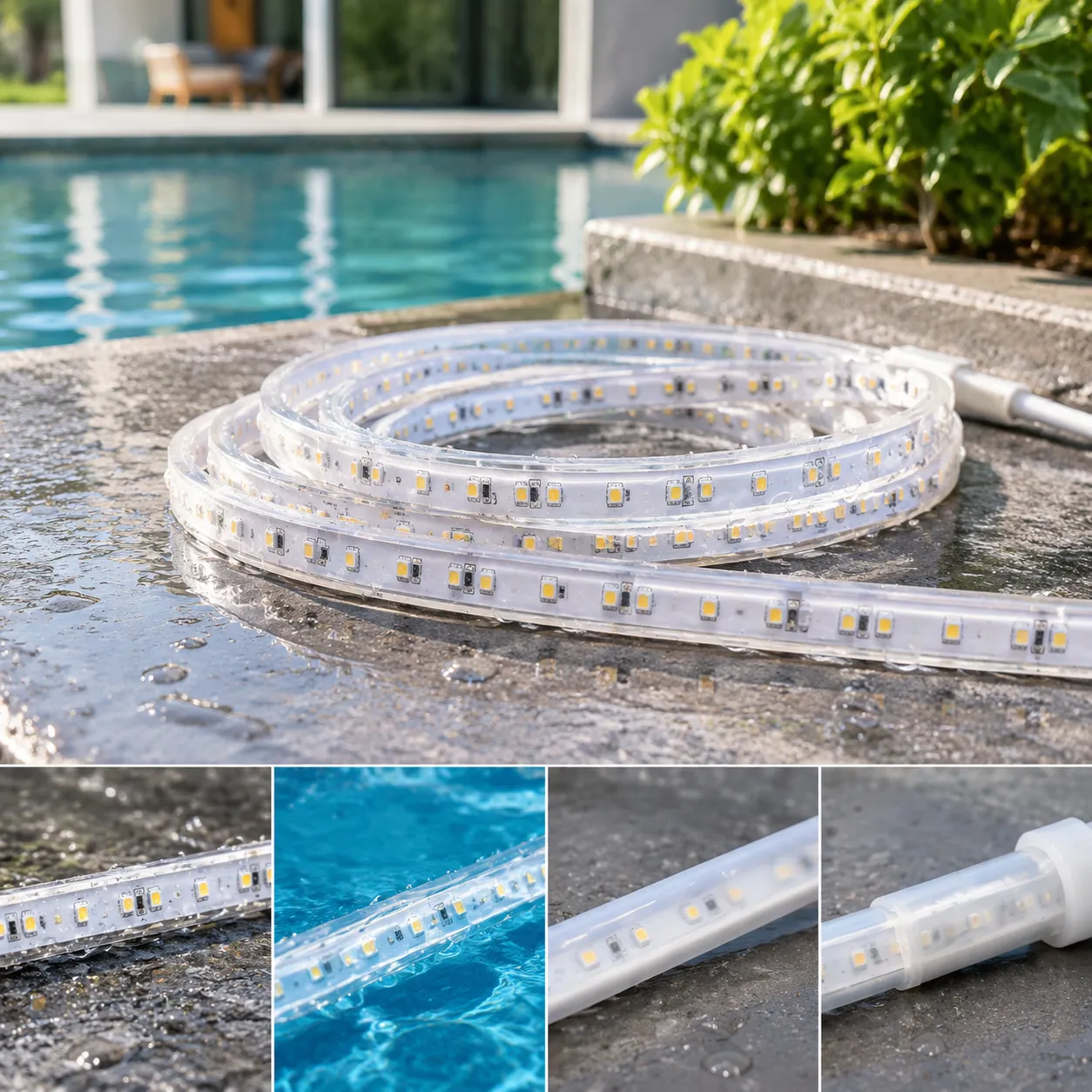
Choosing the correct ingress protection level determines whether a neon led strip lasts for years or fails within weeks. Environmental exposure introduces moisture, dust, chemical vapors, and water pressure that degrade electrical components if the encapsulation fails. We engineer our silicone neon extrusions to match precise exposure zones, ensuring complete barrier protection across indoor, architectural, and underwater environments. For a detailed breakdown of ingress testing standards, refer to our guide on understanding IP ratings for LED installations.
| IP Rating | Primary Protection Mechanism | Ideal Application Environments | Water Resistance Threshold |
|---|
| IP65 | Co-extruded silicone with glued end caps | Indoor coves, bathrooms, sheltered soffits | Low-pressure water jets & high humidity |
| IP67 | Seamless solid silicone extrusion with sealed injection molds | Architectural facades, exterior building accents, rooflines | Heavy rain, temporary immersion up to 1m |
| IP68 | Fully integrated injection-molded factory seals | Swimming pools, fountains, marine docks, reflective ponds | Continuous submersion up to specified depth |
IP65 Water-Resistant Ratings for Damp Indoor Coves and Sheltered Eaves
IP65-rated neon strips handle dust accumulation and localized moisture condensation without signal loss or electrical bridging.
- Dust Ingress: Completely dust-tight, preventing microscopic particles from settling on the internal PCB and causing thermal build-up.
- Moisture Protection: Resists light splashing, steam, and direct low-pressure water spray from standard washdowns.
- Best Placements: Kitchen under-cabinet runs, bathroom vanity backlighting, indoor swimming pool perimeter ceilings (non-splash zones), and covered outdoor patio canopies.
- Termination Requirement: Field-cut sections require manual silicone end caps sealed with industrial RTV silicone adhesive to maintain the IP65 barrier.
IP67 Fully Sealed Extrusions for Commercial Facades and Heavy Rain
Our IP67 outdoor neon led tape is built for direct exposure to severe weather, wind-driven rain, and freeze-thaw cycles on external building surfaces.
- Extrusion Construction: Solid silicone profile with no internal air cavities, eliminating internal condensation caused by ambient temperature swings.
- Immersion Resistance: Withstands temporary water submersion up to 1 meter depth for up to 30 minutes.
- Mechanical Strength: High resistance to UV exposure, wind shear, airborne pollutants, and road salt spray on exterior elevations.
- Installation Focus: Standard choice for open-air building facades, bridge outlines, commercial signage, and exposed rooftop architectural details.
IP68 Continuous Submersion Grade for Swimming Pools, Fountains, and Marine Areas
For projects requiring permanent underwater deployment, our waterproof IP68 neon strip solutions deliver an impenetrable barrier against hydraulic pressure, chlorine, and saltwater corrosion.
- Factory Injection Molding: Connectors and end caps are molded directly onto the silicone body using high-pressure liquid silicone rubber (LSR), leaving zero seams or glue joints.
- Chemical Immunity: Engineered to resist pool sanitizing chemicals, dissolved salts, and high-salinity marine conditions without material hardening or clouding.
- Depth Certification: Rated for continuous underwater operation at defined installation depths, maintaining full lumen output and color accuracy.
- Critical Rule: IP68 neon strips cannot be cut or resealed in the field; exact run lengths and factory-molded feed cables must be specified prior to production to guarantee watertight integrity. Assess structural exposure and material demands using our overview on LED strip reliability and durability scenarios.
Practical Installation, Cutting, and Assembly Guide for Neon LED Strips
Installing a neon led strip requires precision and the right mechanical hardware to maintain optical continuity and long-term waterproof integrity. Whether you are running straight exterior cove runs or detailing intricate curves, following proper assembly protocols prevents electrical shorts, water intrusion, and physical strain on the internal PCB.
Precision Cutting Protocols and Locating Marked Cut Points
Every cuttable neon light strip has fixed cutting intervals determined by its internal circuit design. Cutting off-mark severs the internal trace and creates a dead section.
- Locating the Cut Line: Look for the printed scissor icons, internal dark line shadows visible through the translucent bottom/side jacket, or back-printed indicator points.
- The Right Tooling: Use dedicated, heavy-duty neon shears or a straight-edge utility cutter. Avoid standard diagonal wire cutters, which crush the silicone housing and bend the copper busbars together.
- Cutting Angle: Make a single, clean 90-degree perpendicular cut. A slanted cut misaligns the internal copper pads, making watertight sealing and terminal connections difficult.
Field Termination: Silicone End Caps, Sealant Glue, and Screw Terminals
For on-site adjustments, field termination preserves ingress protection while allowing custom run lengths:
- Prep the Conductor Pads: Strip back minimal silicone if using mechanical snap or screw-lock terminals to expose the copper traces without slicing into the circuit board.
- Apply Neutral-Cure Sealant: Always use industrial-grade, neutral-cure silicone (RTV) glue. Acidic cure (acetoxy) silicones release acetic acid during curing, which corrodes copper leads and causes premature joint failure.
- Secure End Caps: Inject sealant evenly into the cavity of the silicone end cap, press it firmly over the terminated cut edge, and wipe away excess adhesive.
- Curing Window: Allow a full 24-hour cure cycle at room temperature before applying power or exposing the run to outdoor moisture. For field-assembled curved projects, review our neon strip light installation guide to prevent strain on newly sealed joints.
Factory Injection Molding for Permanent Waterproof Sealing
While field terminations handle quick site adjustments, factory injection-molded terminations provide the highest degree of protection against fluid ingress:
- Liquid Silicone Injection: The power feed wire and the silicone extrusion are fused together inside an injection mold under controlled heat and pressure.
- True IP67/IP68 Rating: Injection molding eliminates internal air pockets, creating an inseparable chemical and mechanical bond capable of enduring continuous outdoor rain, thermal expansion, and shallow submersion.
- Integrated Strain Relief: Molded connectors protect internal solder points from tensile pulling forces during heavy commercial installation pulls.
Mounting Hardware: Rigid Anodized Aluminum Profiles vs. Bendable Stainless Steel Tracks
The choice of mounting track dictates the physical line quality of your installation:
| Feature | Rigid Anodized Aluminum Profiles | Bendable Stainless Steel Tracks |
|---|
| Best Application | Straight architectural outlines, facade grazing | Free-form organic curves, signage, wave profiles |
| Bending Capability | Fixed, rigid straight line | Hand-bendable along contour axes |
| Thermal Dissipation | Superior conductive heat sinking | Moderate ambient heat sinking |
| Mounting Style | Screwed directly into substrate / clip-in | Multi-point anchored clips along a curve |
| Corrosion Protection | Anodized 6063-T5 aluminum | 304 or 316 marine-grade stainless steel |
Recessed vs. Surface Mount Channel Installation Techniques
Choosing between recessed and surface channels defines how the fixture integrates with your substrate:
- Surface Mounting with Locking Clips & Tracks: Mount the neon LED aluminum mounting profile directly onto timber, masonry, or drywall using countersunk screws. Press the flexible silicone neon flex into the channel from one end to the other using thumb pressure. Avoid dragging or stretching the silicone, as it will retract later and pull out of the mounting clips.
- Recessed (Flush-Mount) Channels: Router a channel slightly wider than the extrusion to account for the silicone body and thermal expansion. Use flanged aluminum profiles to conceal rough millwork or drywall edges, creating a seamless, dot-free architectural illumination flush with the finished wall or ceiling.
Troubleshooting Common Neon LED Strip Issues and Best Practices
Field installations can present unexpected electrical and environmental challenges. We focus on direct, practical troubleshooting protocols to keep every neon LED strip operating at peak performance without costly site recalls.
Diagnosing and Eliminating Voltage Drop with Dual-End and Ring-Circuit Feeds
When a neon LED strip shows visible dimming, color shifting, or pinkish hues toward the end of a run, voltage drop along the internal copper traces is the culprit. When designing long linear runs, understanding LED strip voltage drop and solutions is essential to maintain uniform luminance from end to end.
- Dual-End Power Injections: Feed DC power to both the start and end of runs exceeding 5 meters (for 12V) or 10 meters (for 24V).
- Parallel Ring Circuits: Loop the positive and negative return lines back to the primary power supply terminal to equalize line resistance across large-scale architectural perimeters.
- Secondary Feeder Cables: Run thicker-gauge external trunk cables (14 AWG to 12 AWG) alongside the mounting profile, tapping into the neon flex at 5-meter increments.
| Run Configuration | Maximum Single-End Run (24V) | Recommended Power Injection Method |
|---|
| Standard Runs (≤ 5m) | 5 meters | Single-end terminal feed |
| Medium Runs (5m – 10m) | 10 meters | Dual-end simultaneous feed |
| Long Runs (10m – 20m+) | 10 meters per section | Parallel backbone wiring with intermediate feeds |
Fixing Flickering Issues from PWM Dimmer Incompatibilities and Noisy Drivers
Strobing, micro-flicker at low dimming levels, and audible hum usually stem from mismatched control gear or unstable DC output. Identifying and solving LED driver issues and glitches prevents driver burnout and stabilizes light output.
- PWM Frequency Matching: Ensure your PWM dimmer operates at a frequency of 1.5 kHz or higher to eliminate camera banding and human eye fatigue.
- Driver Load Balancing: Operate constant-voltage power supplies within 20% to 80% of their rated capacity. Overloading causes thermal shutdown cycles, while severe underloading destabilizes the output voltage regulator.
- AC Mains Decoupling: Separate low-voltage 24V DC neon lines from high-voltage AC feeds by at least 15 cm inside raceways to prevent inductive noise pickup.
Preventing DMX and SPI Signal Loss in Long Control Runs
Digital pixel and addressable neon strips rely on precise high-speed data transmission. Signal reflections, line capacitance, and electromagnetic interference cause erratic flashes, frozen frames, or unsynced chase effects.
- Terminal Resistance (DMX512): Always bridge a 120-ohm, 1/4-watt resistor across the Data+ and Data- terminals at the last fixture in the DMX chain to absorb signal echoes.
- Data Line Limits (SPI): Keep single-ended TTL/SPI data lines (WS2811, UCS1903) between the controller and the first pixel under 5 meters. For runs beyond 5 meters, insert an inline data signal amplifier or convert to differential RS485 transceivers.
- Shielded Cabling: Use dedicated Shielded Twisted Pair (STP) wiring for all data connections, grounding the shield drain wire at the controller chassis only to avoid ground loops.
Thermal Dissipation and Airflow Management to Prevent Lumen Degradation
Encapsulating high-density LED strips within thick silicone diffusers retains heat if not managed properly. Elevated junction temperatures accelerate phosphor degradation, drop output lumens, and cause premature component failure.
- Aluminum Track Dissipation: Always seat flexible silicone neon flex inside rigid anodized aluminum channels rather than surface-gluing to wood or drywall; the metal housing acts as a primary heat sink.
- Convection Clearance: Maintain at least 10 mm of free airspace around concealed ceiling coves and millwork recesses to allow natural convective airflow.
- Ambient Thermal Ceilings: Limit the continuous operating temperature around the silicone casing to under 55°C (131°F). In high-heat exterior environments, reduce operating drive currents by 15–20% to maintain the rated lifespan of the fixture.
Key Architectural and Commercial Neon LED Strip Applications
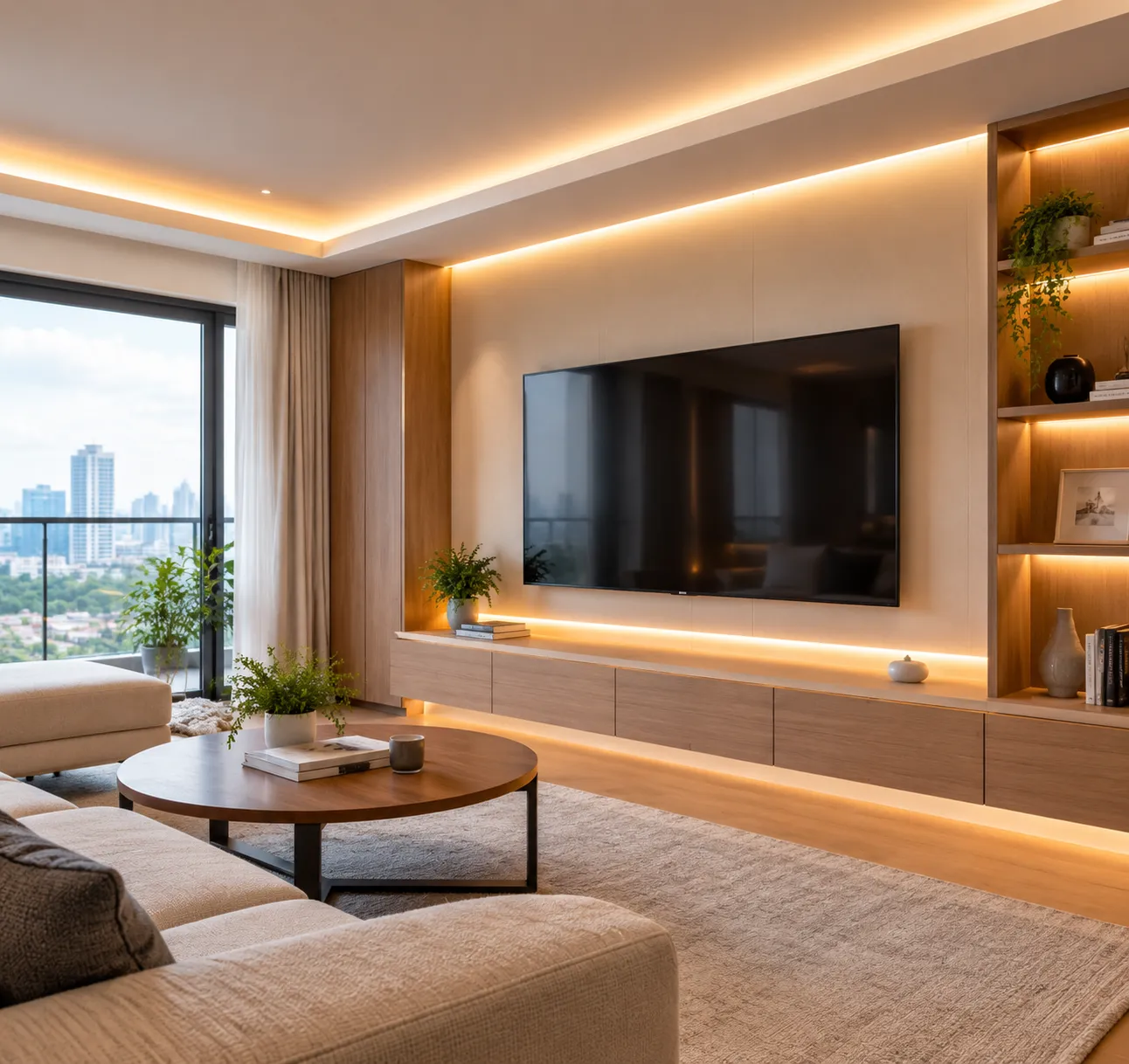
Modern architectural and commercial designs demand seamless, dot-free illumination that conforms to challenging geometries. We engineer each neon led strip system to replace fragile traditional glass neon and eliminate the harsh, pixelated hotspots common with standard exposed LED tape.
From extreme outdoor environments to luxury interior spaces, high-grade silicone extrusions provide the mechanical durability and optical diffusion needed for high-impact commercial installations.
Building Facade Outlining, Bridge Contouring, and Exterior Highlights
Outlining large-scale architectural structures requires high lumen consistency, weather resistance, and long-run reliability. We use robust silicone neon profiles to trace rooflines, parapets, bridge arches, and commercial architectural facade lighting projects.
- Uniform Long-Distance Visibility: Delivers a continuous band of solid light with no dark spots across expansive building perimeters.
- Environmental Resilience: High UV, salt-mist, and extreme temperature resistance prevent yellowing, micro-cracking, and weather-induced failure on high-elevation exterior facades.
- Structural Integration: Side-bending and top-bending profiles mount flush against metal, concrete, or stone curtain walls using heavy-duty anodized aluminum channels.
Custom Retail Signage and High-Definition Linear Brand Logos
For retail spaces and brand identity projects, crisp lines and tight bending curves are essential. Flexible silicone neon flex allows fabricators to create intricate shapes, sharp geometric patterns, and modern custom neon signage lighting.
- Tight Bend Radii: Bends smoothly around tight contours to form detailed typographic strokes and complex brand logos without optical distortion.
- Pencil-Beam and Slim Profiles: Ultra-thin extrusions enable compact, low-profile signage letters with high-definition visibility at close viewing distances.
- Low-Voltage Safety: 12V and 24V DC configurations allow safe handling, precise field trimming, and effortless integration into indoor point-of-sale displays.
Hospitality Accents: Cove Ceilings, Backlit Bar Tops, and Stair Step Lighting
In luxury hotels, restaurants, and entertainment venues, lighting must create atmosphere without exposing raw diodes. Comparing the advantages and disadvantages of LED strip lighting shows that fully diffused neon flex is superior for reflective interior surfaces, preventing distracting reflections on polished marble, glass, and varnished wood.
- Cove and Drop-Ceiling Accents: Casts soft, uniform indirect ambient lighting across ceiling contours with zero scalloping.
- Backlit Bar Tops and Millwork: The solid silicone diffuser produces an even glow through translucent stone, acrylic panels, and under-counter recesses.
- Low-Profile Step Safety: Mounts cleanly underneath stair treads and handrails to deliver discreet, glare-free path illumination.
Landscape and Hardscape Walkway Integration with High Walk-Over Ratings
Outdoor hardscaping demands structural integrity capable of withstanding moisture ingress, dirt accumulation, and heavy foot traffic. We embed high-grade, walk-over rated neon extrusions directly into pavers, garden retaining walls, concrete walkways, and pool surrounds.
- Drive-Over and Walk-Over Strength: Solid silicone profiles housed in heavy-gauge recessed aluminum tracks withstand continuous compressive loads in public plazas and driveways.
- Direct Burial and In-Ground Flush Mounts: Fully sealed IP67 and IP68 constructions resist continuous ground moisture, irrigation spray, and soil acidity.
- Budget-Balanced Longevity: When understanding the high cost of landscape lighting installations, specifying fully encapsulated neon strips reduces long-term maintenance costs and eliminates frequent fixture replacements.
Frequently Asked Questions About Neon LED Strips
Can you cut neon LED strips to any custom length?
You cannot cut a neon led strip at just any random point. You must make cuts exclusively along the factory-marked cut lines printed on the side or back of the profile.
- 12V Neon Strips: Typically feature short cut intervals between 10mm and 25mm, making them ideal for precise signage.
- 24V Neon Strips: Feature cut intervals between 50mm and 100mm, optimized for architectural runs.
Cutting outside these designated solder bridge zones severs the internal circuit board traces, deadening that entire segment. Always use sharp shears perpendicular to the profile to ensure clean, flat copper pad contact for end cap installation.
What is the maximum run length of a 24V neon LED strip before voltage drop occurs?
For a standard 24V LED neon rope light, the maximum continuous single-ended power run is 5 meters (16.4 feet). Beyond 5 meters, electrical resistance along the flexible PCB traces causes a drop in voltage, resulting in visible lumen attenuation and color shifting toward the tail end.
| Power Feed Method | Maximum Recommended Run Length | Voltage Stability |
|---|
| Single-End Feed | Up to 5 meters (16.4 ft) | Minimal drop across 5m |
| Dual-End Feed (Both Ends) | Up to 10 meters (32.8 ft) | Uniform brightness throughout |
| Parallel Ring Feed | 15+ meters (Multiple injection points) | Zero noticeable lumen loss |
For architectural installations spanning 20 to 30 continuous meters without intermediate power injection, we utilize 48V DC systems or constant-current driver ICs.
Is silicone neon flex better than PVC neon strip lighting?
Yes. Flexible silicone neon flex outperforms PVC across all commercial and architectural metrics. Silicone retains its elasticity across an extreme temperature range of -40°C to +60°C and does not degrade when exposed to continuous direct sunlight or saline marine environments.
In contrast, PVC profiles contain plasticizers that leach out under direct ultraviolet exposure, causing the material to harden, turn brittle, crack, and yellow within 12 to 18 months. Exploring the difference between PVC vs silicone LED neon flex clarifies why silicone co-extrusion is our standard for architectural exterior specifications.
How do you achieve seamless waterproof IP68 connections on outdoor neon lights?
Achieving a true waterproof IP68 neon strip termination requires a permanent, hermetically sealed mechanical bond:
- Factory Injection Molding: The gold standard. We inject liquid silicone directly over the soldered lead wires and profile ends inside a high-pressure mold, curing it into a single solid piece.
- Field Assembly Kits: When cutting on-site, use specialized silicone end caps filled with industrial-grade, non-corrosive silicone sealant (neutral cure RTV). Push the cut strip firmly into the cap and allow a full 24-hour cure before testing or submersion.
- Dual-Wall Heat Shrink: Apply an outer polyolefin heat shrink sleeve with internal hot-melt adhesive over the joint to add secondary strain relief and moisture barrier defense.
What is the difference between top-bend and side-bend neon strips?
The difference lies in the axis of curvature relative to the light-emitting surface. Reviewing the different types of LED neon flex strip will help you select the right profile for your installation geometry:
- Top-Bend (Vertical Flex): Bends perpendicularly to the light face (up and down). This orientation is engineered for architectural coves, wall grazing, archways, and rolling vertical contours.
- Side-Bend (Horizontal Flex): Bends laterally along the plane parallel to the light face (left and right). This is the standard choice for 2D flat wall art, channel lettering, curved retail counters, and perimeter logo outlines.