DMX512 Protocol Fundamentals in Strip Lighting
The provided source contains no verified information about DMX512 protocol operation, baud rate, packet format, refresh rate, signal type, noise immunity, or transmission distance. No technical specifications can be stated without reliable source content.
DMX LED Strips vs. SPI Addressable LED Strips
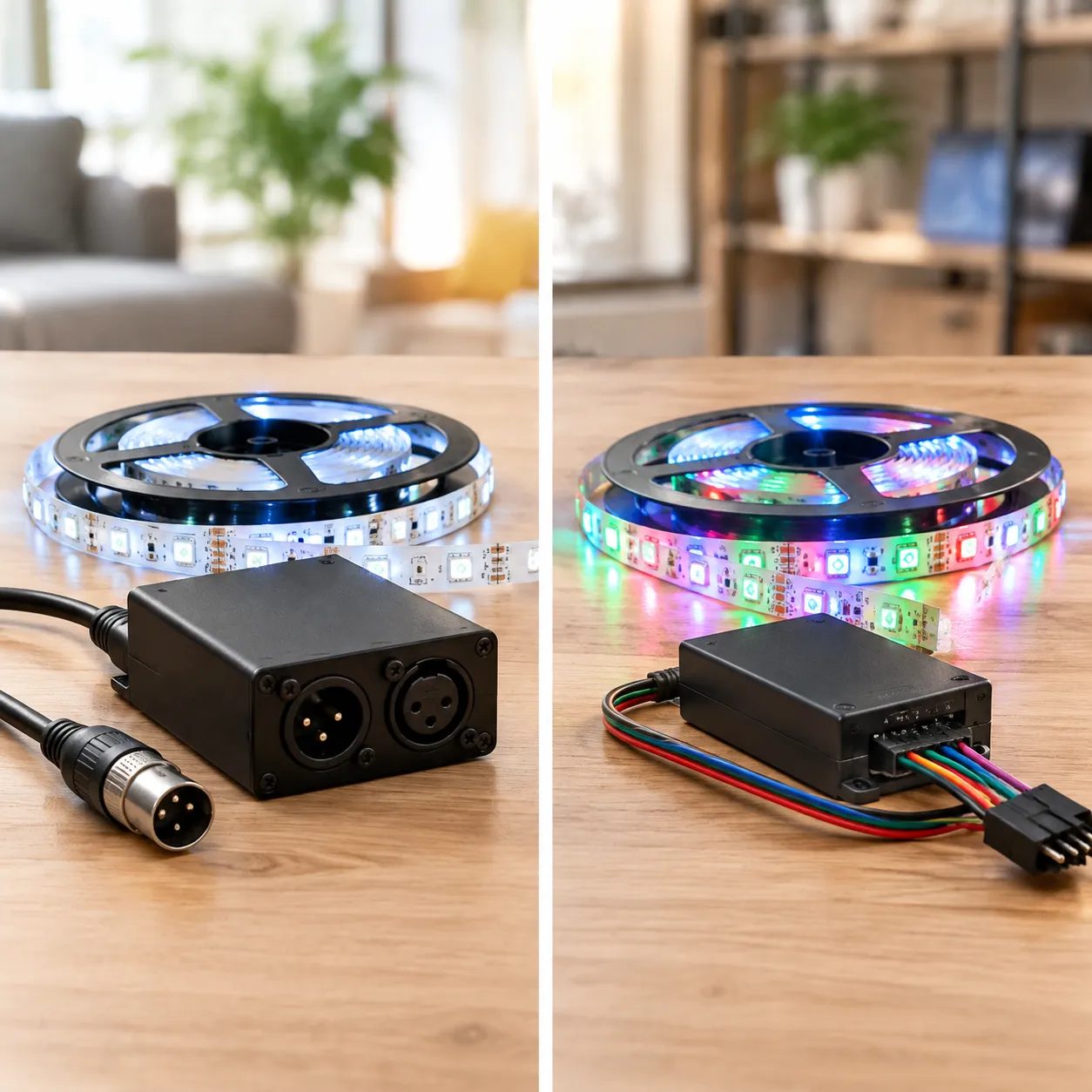
A reliable comparison between a DMX LED strip and an SPI addressable LED strip requires verified product data. The available source does not provide confirmed details about signal transmission, failure behaviour, addressing, distance, speed, stability, or cost.
| Comparison point | Verified information |
|---|---|
| Signal transmission | Not specified |
| Dead IC behaviour | Not specified |
| Addressing method | Not specified |
| Maximum distance | Not specified |
| Operating speed | Not specified |
| Stability | Not specified |
| Cost | Not specified |
No performance advantage should be assigned to DMX or SPI without confirmed technical documentation.
Types of DMX LED Strips and IC Chipsets
When we specify a DMX LED strip, we first match the colour format to the lighting effect required:
- Mono for single-colour output
- Tunable white (CCT) for adjustable white tones
- RGB for colour mixing
- RGBW for colour effects with a dedicated white channel
- RGBCCT for colour mixing and adjustable white output
These options differ in channel layout and control requirements. Our guide to RGB, RGBW, RGBIC, RGBWW and RGBCCT LED strip lights explains the main colour-format differences.
DMX IC Options
Direct DMX designs may use UCS512, TM512 or Hi512 series ICs. Some configurations include dual-signal backup to support more stable signal transmission. The correct IC choice depends on the required control method and installation design.
Voltage Classes
DMX LED strips are commonly considered in three groups:
- 12V DMX strips for suitable low-voltage installations
- 24V DMX strips for projects requiring a different power arrangement
- Constant-current DMX strips for applications where controlled current delivery is important
The power design should match the strip configuration, installation length and project requirements.
Direct DMX or External Decoder?
A direct DMX LED strip receives DMX control within the strip design. A standard LED strip normally needs an external DMX decoder to translate the control signal. Direct DMX can simplify system planning, while a decoder-based setup may suit projects using existing standard strips.
DMX Addressing, Channels, and Universe Calculations
The available source content does not provide verified details about DMX channel limits, pixel capacity, addressing methods, or universe calculations. These values depend on the specific DMX LED strip, controller, and chipset selected.
Before installation, confirm:
- The channel count required by each pixel or color mode
- The maximum capacity of the selected DMX controller
- Whether addresses are assigned manually or automatically
- The supported addressing tools and configuration software
- The recommended strip length and pixel capacity for each output
Use the manufacturer’s wiring and programming instructions to calculate channel usage and assign DMX addresses accurately.
DMX LED Strip System Architecture
A reliable DMX LED strip installation depends on a clear control chain:
Lighting software or console → Art-Net/sACN node → DMX output → DMX LED strip → Power supply
Software and Hardware Integration
Platforms such as Madrix, Resolume, TouchDesigner, QLC+, and grandMA can be used as part of a lighting-control workflow, depending on the project setup and system compatibility.
For hardware selection, we focus on:
- Art-Net or sACN nodes for network-to-DMX conversion
- Opto-isolated splitters for distributing DMX signals
- Suitable power supplies matched to the installation
- Clear separation between control wiring and power wiring
This organised approach makes system testing and fault tracing simpler. For broader LED strip planning, our LED strip light application and selection guide provides additional project considerations.
DMX LED Strip Wiring and Installation
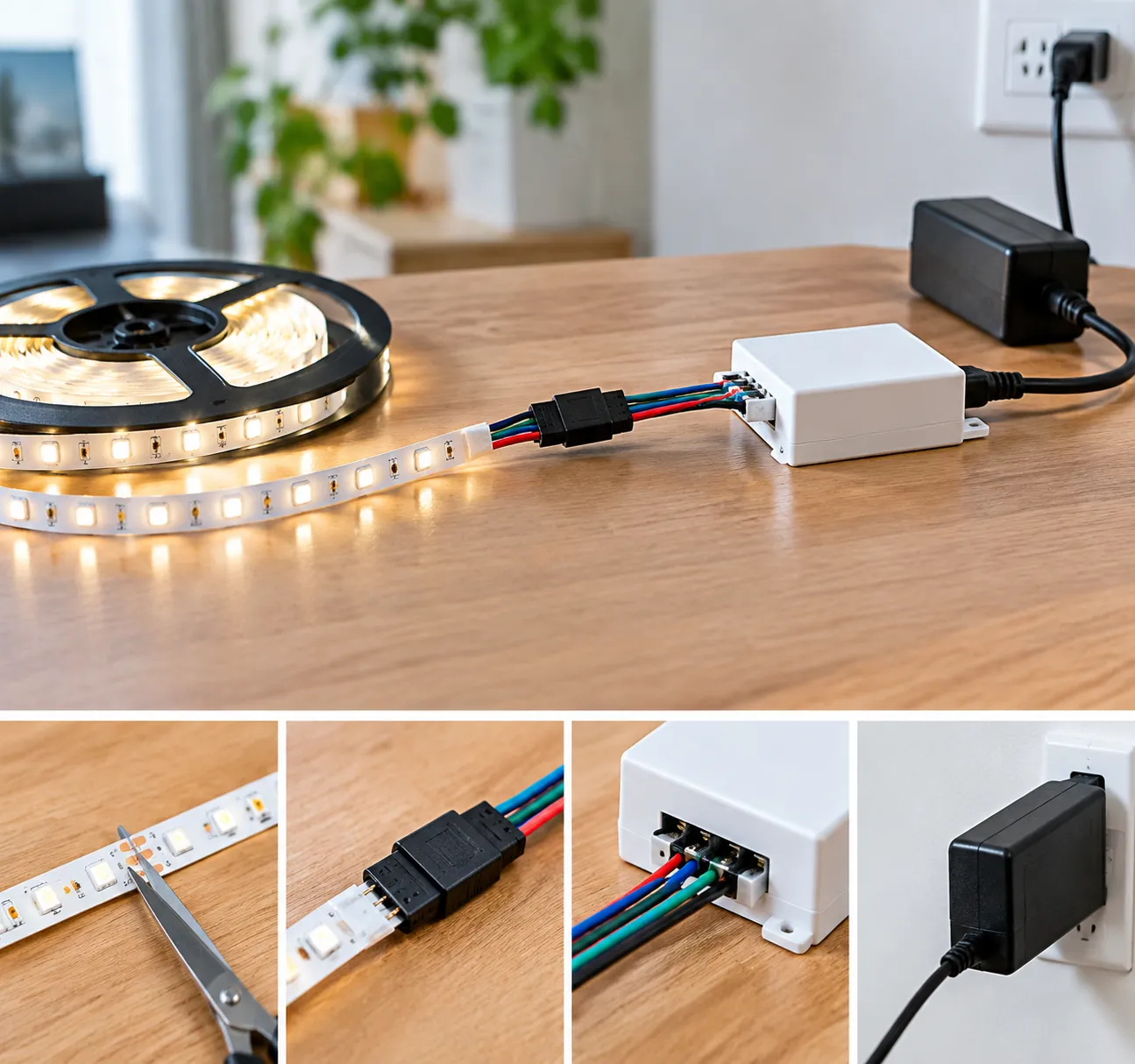
The available source content does not provide verified wiring instructions, pinouts, grounding requirements, termination details, power-injection intervals, or thermal-management specifications for a DMX LED strip. These details should be confirmed from the product’s official installation documentation before wiring or installation.
DMX LED Strip Troubleshooting
When a DMX LED strip behaves unpredictably, start with the basics:
- Random flashing or pixel jitter: Check the ground connection, cable condition, and signal path for interference or reflection.
- Incorrect colours or delayed response: Review the DMX address and channel mapping in the controller software.
- Fading or dimming near the end of the run: Inspect the power supply, cable length, and voltage stability. Our guide to LED strip voltage drop and practical solutions covers the main checks.
- Complete signal loss after one segment: Examine the data line, connectors, and solder joints around the last working section.
Test one section at a time, secure every connection, and confirm the controller settings before replacing components.
Typical DMX LED Strip Applications
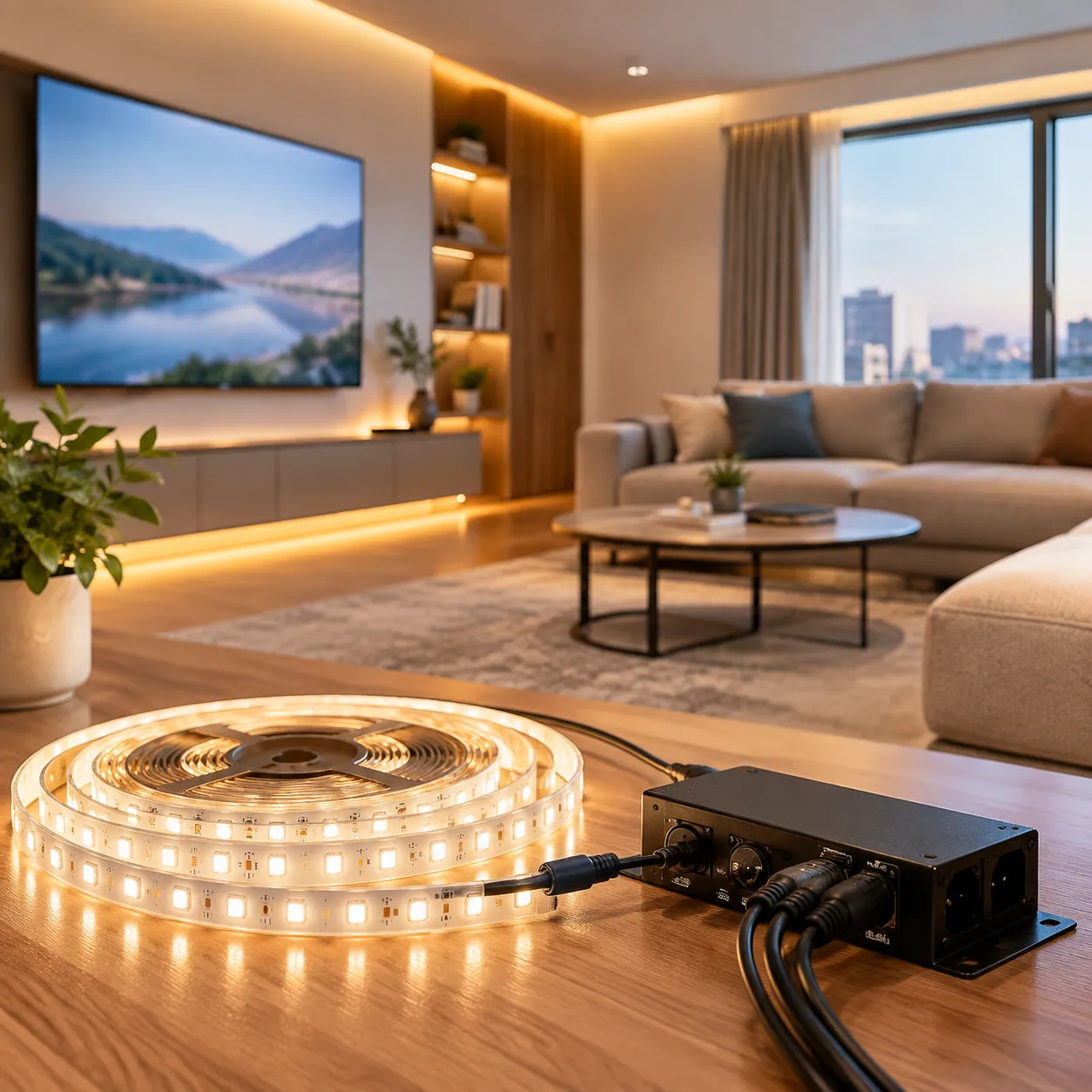
I use DMX LED strips where flexible linear lighting needs coordinated colour and brightness control across a project.
- Architectural facades and bridges: Create controlled linear lighting for building outlines, structures, and bridge features.
- Entertainment venues and concert stages: Support dynamic effects for stage lighting, touring rigs, and live productions.
- Nightclubs, visual rooms, and studio sets: Provide programmable colour effects for immersive spaces and controlled environments.
- Retail and commercial lighting: Add coordinated linear illumination to large displays, feature areas, and commercial interiors.
For broader planning guidance, our overview of the advantages and disadvantages of LED strip lighting helps place DMX LED strips within wider lighting decisions.
Specifying DMX LED Strips for Commercial Projects
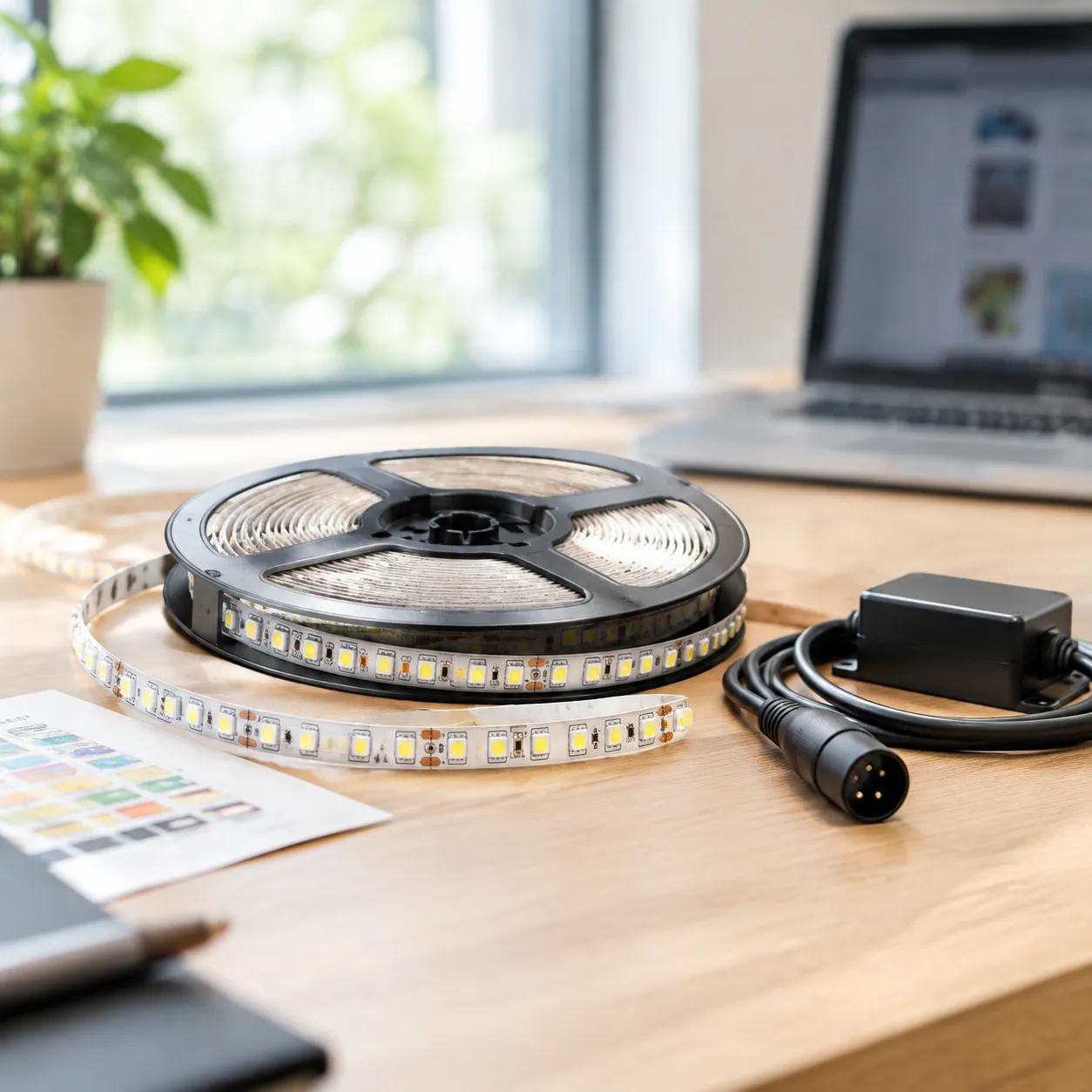
For a commercial DMX LED strip project, I confirm the technical details before selecting a product. The right specification depends on the required lighting resolution, control setup, installation environment, and project scale.
Commercial Specification Checklist
| Parameter | What I confirm |
|---|---|
| Resolution | LED or pixel spacing required for the visual effect and installation size |
| PCB copper thickness | Whether 2 oz or 3 oz copper is suitable for the planned electrical load and run length |
| LED binning | Consistent colour and brightness performance across the full project; our guide to LED binning and its meaning explains the key checks |
| IC configuration | The required DMX control arrangement and compatibility with the project controller |
| PCB width | Whether the strip fits the selected profile, mounting surface, and installation method |
For OEM and ODM projects, I define the required IC configuration, resolution, and PCB width in the technical brief. Any custom option should be confirmed through the supplier’s product documentation and project testing before production.
Frequently Asked Questions About DMX LED Strips
| Question | Answer |
|---|---|
| Can you cut DMX LED strips like regular LED strips? | Cut only at the marked cutting points. After cutting, check the power and data connections before reconnecting each section. Our guide to cutting LED light strips explains the basic process. |
| How many DMX LED strip pixels can run on one DMX universe? | The exact number depends on the strip’s channel count, color format, pixel layout, and controller settings. Calculate the total channels required before assigning DMX addresses. |
| What is the difference between UCS512 and WS2811/WS2812B strips? | They use different control systems and IC configurations. Confirm the required protocol, wiring, addressing method, and controller compatibility before mixing products. |
| Do DMX LED strips need a terminating resistor on every run? | Not every installation uses the same termination arrangement. Follow the strip and controller wiring instructions, especially on longer signal runs or systems with signal reflection. |
| How far can a DMX signal travel without a repeater? | The practical distance depends on the cable, installation quality, grounding, signal format, and environment. For longer runs, verify the manufacturer’s rated distance and use suitable signal distribution hardware when required. |
Related Sources